What Does a Tinder Profile Look Like in 2026?

If you want to know what a Tinder profile looks like in 2026, the fastest way is to sit next to someone swiping and watch what actually loads on her screen. A Tinder profile is not a form with a headshot and a bio anymore. It is a full-screen stack of photos, a blue verified badge or a conspicuous lack of one, a short bio, a handful of prompts, some info tags, and maybe a quiz, and she reads all of it in about three seconds before deciding. I spend a lot of time on that side of the app, so let me walk you through exactly what a man's profile looks like from where I sit.
The anatomy of a Tinder profile, top to bottom
Open a profile and here is the order things arrive in, roughly the order they matter:
- The first photo, full screen. It loads before anything else and takes up the entire display. This is the whole ballgame. Most profiles are judged here before a single word is read.
- Name, age, and the verified badge. A blue checkmark next to the name says the person passed Tinder's face verification. Its presence, or absence, registers instantly.
- The rest of the photos. You swipe up or tap through the remaining slots, up to nine of them.
- The bio. A line or two of text. Short, and often skipped if the photos already lost her.
- Prompts, info tags, and a quiz. Small conversational and factual details Tinder added to make profiles feel like people rather than headshots.
- Connected apps. Music, and now a couple of lifestyle apps, pulled in through Tinder Connect.
Notice how top-heavy that is. By the time she reaches your bio, the photos have already made most of the decision. So that is where we start.
The photos: what actually fills the screen
At its Tinder Sparks 2026 keynote in March, Tinder pushed the photos even bigger. Your lead shot now fills the whole screen with a subtle edge-to-edge blur behind it, under a glassy Like and Nope bar. There is nowhere to hide. A weak first photo is not a small thumbnail she can look past, it is the entire screen for the second she spends deciding.
Tinder gives you up to nine slots, but the target for most men is four to six strong ones. I cover how many photos for Tinder you really need in a separate guide.
What the set has to do is simple: show your face clearly, show your build, and show a bit of your life. A sharp solo lead photo, a full-body shot, one with other people, and one of you doing something you actually do. I am not going to re-run the full photo playbook here, because we already have one on what pics to put on Tinder and another on the best Tinder photos for guys. The point for this article is what the finished thing looks like on her screen, and the honest answer is that most men lose it on photo one.
From my side, each photo in a good set is quietly answering a question I never asked out loud:
- The lead photo answers "what does his face actually look like." Clear, lit, alone, no sunglasses.
- A full-body shot answers "what is his build, and is he hiding it." Its absence is loud. When every photo stops at the chest, I assume the worst.
- A photo with other people answers "do other humans enjoy his company." Not a group shot where I cannot find him, one where he is obviously the guy and obviously liked.
- An activity or travel shot answers "what would spending time with him look like." A hobby, a trip, a dog, something that reads as a life rather than a pose.
A profile that answers all four in four to six frames feels like a person. A profile of five selfies in the same room answers none of them, and that sameness is its own red flag.
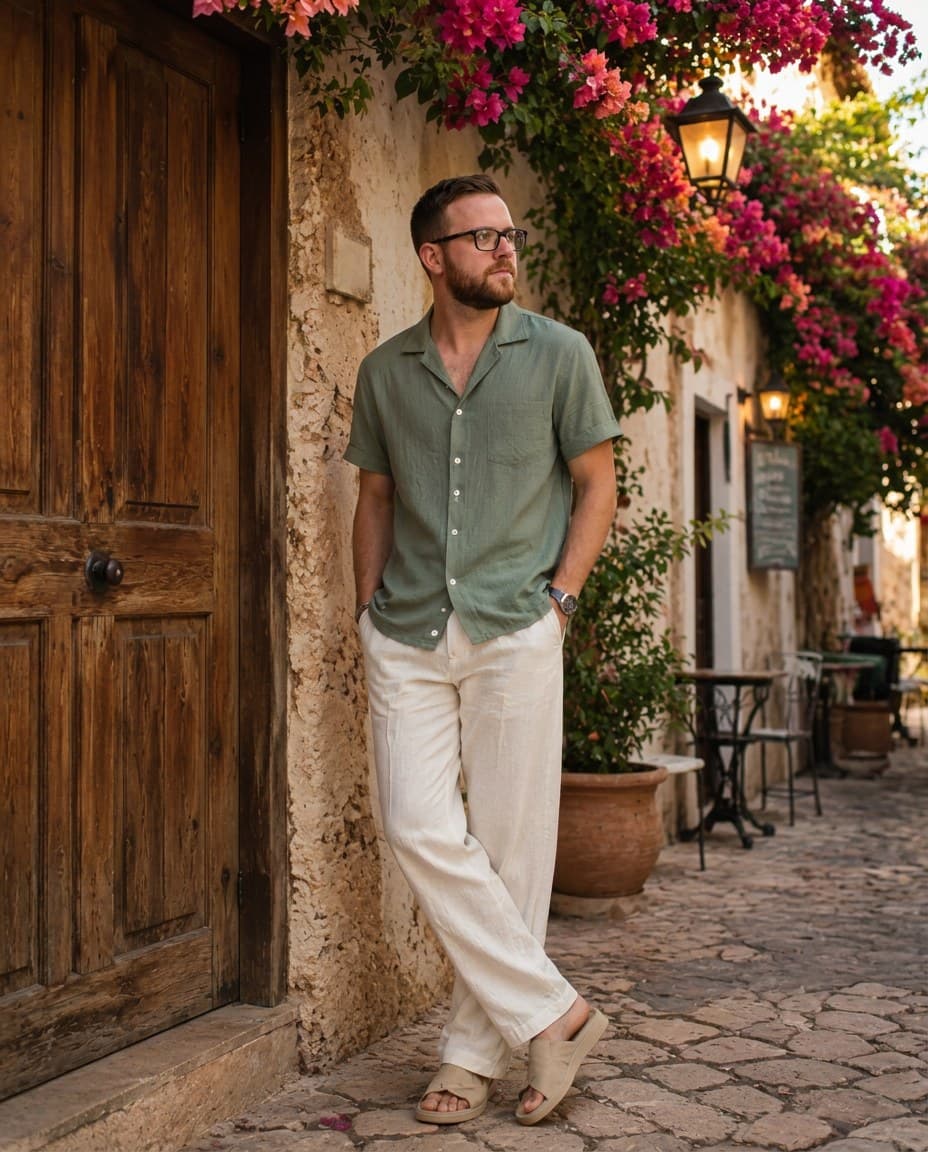
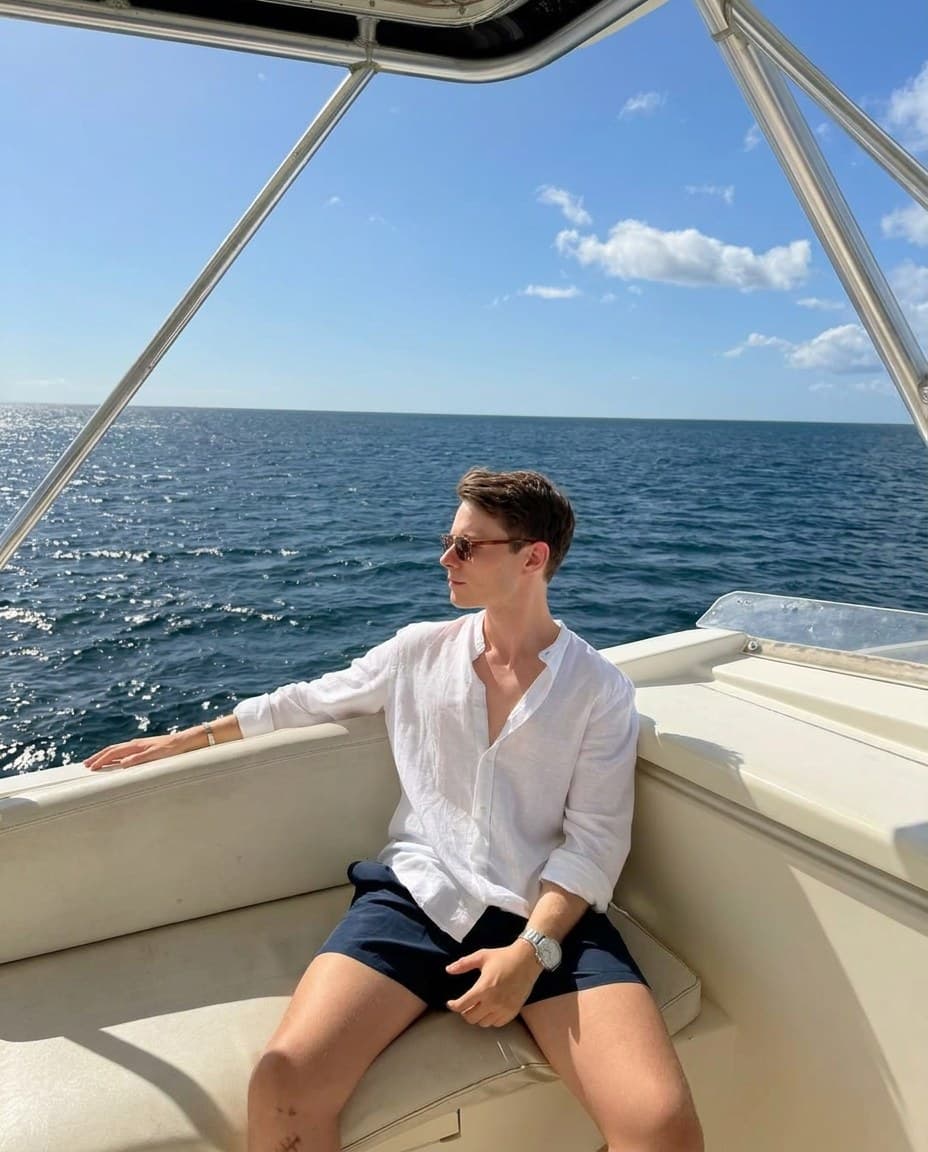
Here is the difference a single lead photo makes, using the same guy:
 Before
 After
AfterNothing about him changed except the lighting, the framing, and the setting. That alone is the gap between a profile that gets swiped past and one that earns a second look.
The bio, prompts, quizzes, and info tags
Scroll past the photos and you hit the text layer Tinder built out in its 2023 redesign, which is standard furniture on a profile now.
The bio is a line or two in your own words. Nobody reads a paragraph. One specific, slightly funny, real sentence beats a list of adjectives.
Prompts are fill-in-the-blank conversation starters. Tinder offers openers like "The key to my heart is," "Two truths and a lie," and "The first item on my bucket list is." A good prompt answer gives me something concrete to message you about, which is the whole reason they exist. The difference between a good answer and a dead one is specificity. "The key to my heart is good food" gives me nothing. "The key to my heart is a taco spot I have not tried yet" hands me an opening line for free. Vague answers waste the slot. Specific ones do half the work of the first message.
Info tags are the quick facts: your pets, whether you drink, your zodiac sign, what you are looking for. From the swiping side these are filters as much as flavor. If a tag is a dealbreaker for someone, it saves both of you the trouble.
The quiz is a newer, optional bit where you answer a few questions about yourself so a match can get a read on your personality before writing.
Connected apps round it out. Tinder Connect lets you pull in other apps you already use, Spotify since 2016 and now partners like Duolingo and Beli, so your music taste or your favorite restaurants show up on the profile itself. It is a small thing, but it makes a profile feel lived-in rather than staged.
None of this text saves bad photos. All of it makes good photos convert better, because it turns a face I liked into a person I want to talk to.
What her three-second read actually clocks
Here is the uncomfortable truth from the swiping side: I am not studying your profile, I am reacting to it. In the first second I clock the lead photo and whether you look like someone I would want to meet. In the second, my eyes go to the badge and to whether the next photo confirms or contradicts the first. By the third, I have usually decided, and the bio is either a tiebreaker or never read.
What tips a close call toward yes is coherence. The face stays consistent across every photo. The mood of the pictures matches the mood of the prompts. Nothing feels borrowed, over-edited, or staged purely for the app. What tips it toward no is any hint of "this is not quite real": a face that shifts between shots, a lead photo that is clearly the only good one you own, or a set so filtered I cannot tell what you actually look like. On an app full of options, doubt is a left swipe.
The blue Photo Verified badge
This is the part of a 2026 profile that has changed the most, and the part most men underrate. That blue checkmark comes from Face Check, Tinder's face verification, which the company began requiring of every new member in October 2025, starting with seven countries and California and expanding through more US states since. You record a short video selfie, Tinder confirms you are a real person and that your face matches your photos, and a match earns you the badge.
From the swiping side, the badge is quiet but it matters. It tells me the guy in the photos is a real, present person and not a set of borrowed or heavily edited images. As verification becomes the default, a profile without the badge starts to stand out in the wrong way, especially if the photos already look a little too polished to be true. Getting verified is one of the cheapest trust wins available, and it is worth doing early.
There is a catch that trips men up, though. Face Check compares your live face to your photos, so a profile built on filtered or edited shots that no longer look like you can fail verification. If you want the full picture of that, we cover why a selfie ends up under review. The short version: your photos have to look like the real you, or the badge does not come.
What a strong and a weak profile look like side by side
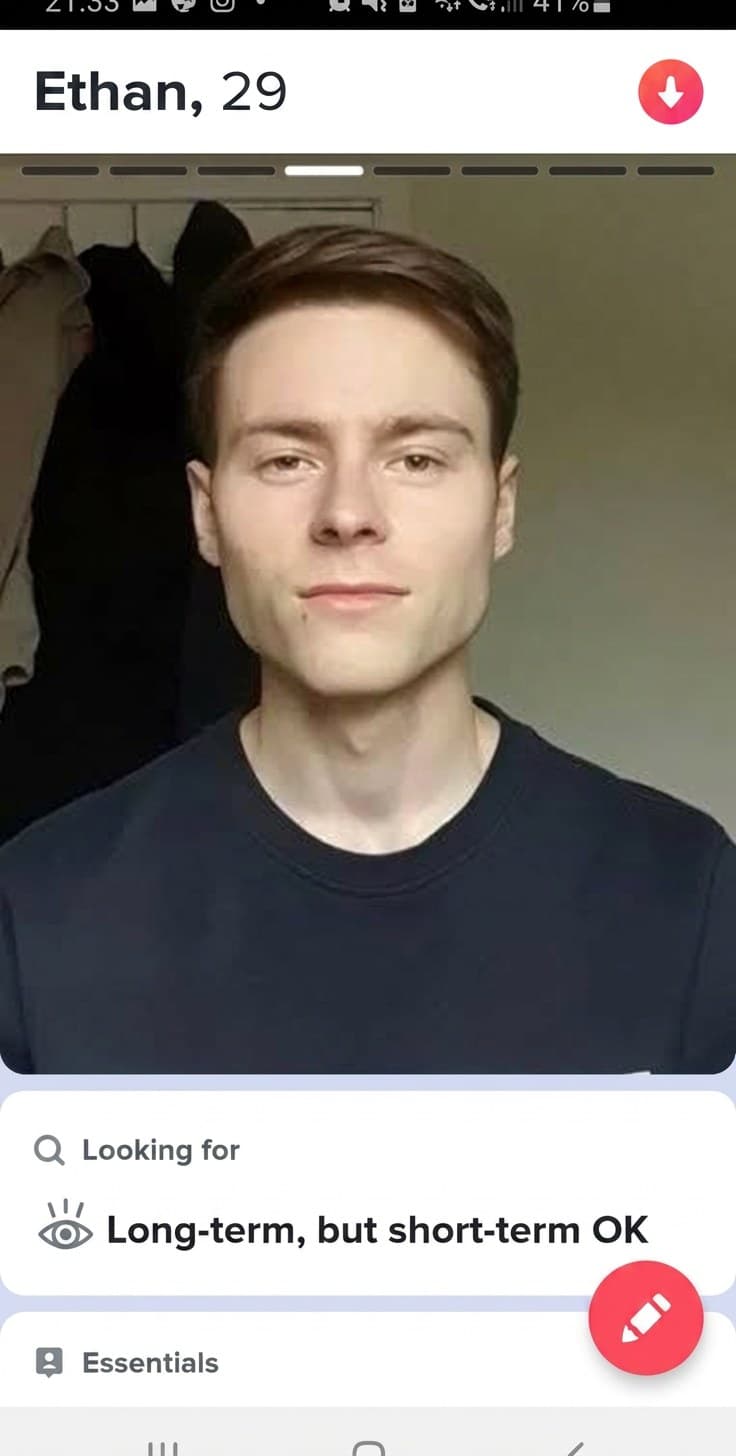
The gap is not subtle. A weak profile leads with a dim selfie or a group shot where I cannot find him, repeats the same room and angle, and runs an empty bio with no badge. A strong one leads with a clear, well-lit face, follows with a full-body shot and one that shows a life, adds a couple of real prompt answers, and wears the blue check. It does not need a model, just a real, specific person who made a normal amount of effort.
 Before
 After
AfterSkip the photoshoot
Upload one selfie and get dating-app photos that actually look like you. Your first photos are free.
Get my photos freeHow to build a profile that looks like this when you do not have the photos
Here is the wall most guys hit, and I see it constantly. They understand what a good profile looks like. They just do not own the photos to build one. Nobody has taken a decent picture of them in months, they have one usable selfie, and the idea of staging a full shoot to get a full-body shot, a social shot, and an activity shot never happens.
That gap is the reason Rizzshots exists. You upload the selfie you already have, and it generates dating-app-ready photos of you in different realistic settings, all locked to your real face so they still look like you and still pass verification. It turns your one usable photo into the varied, four-to-six-photo set a Tinder profile is supposed to have, in minutes instead of the weeks a photographer takes. Your first photos are free, so you can check the likeness before you decide anything. It does not write your bio or answer your prompts, that part is still on you, but it solves the photo problem that stops most profiles before they start.
Tinder profile questions, answered
What does a good male Tinder profile look like? A clear, well-lit lead photo of just you, then a mix that shows your face, your full height, and your life: an activity shot, a social shot, maybe a travel or pet photo. Add a short bio with a hook, a couple of prompts, honest info tags, and the blue verified badge. Four to six strong photos beat nine mediocre ones.
How many photos does a Tinder profile show? Tinder gives you up to nine photo slots, but the number most men should aim for is four to six good ones. The first photo carries almost all of the decision, so it has to be your strongest.
Do you need the verified badge on Tinder? You are not forced to have it on every account yet, but Face Check is now mandatory for new members in several regions, and a profile with the blue badge reads as more trustworthy from the swiping side. An unverified profile increasingly stands out in the wrong way.
What should the first Tinder photo be? A sharp, well-lit head-and-shoulders shot of you alone, looking at the camera, with a genuine expression. No sunglasses, no group, no hat covering your face. It is the single most important frame on the whole profile.
Can other people tell how a profile was made? They cannot see your settings, but they can absolutely tell when photos do not match. A profile where the face changes from photo to photo, or does not match a live person on the date, is the fastest way to lose trust. Consistency reads as honesty.
The bottom line
A Tinder profile in 2026 is photos first and everything else second. A full-screen lead shot, four to six strong images, a blue verified badge, a short bio, a few prompts, and some info tags, read top to bottom in about three seconds. The men who do well are not the best looking. They are the ones whose first photo is clear, whose set actually shows a life, and whose face reads as real and consistent all the way down. Build that, get the badge, and you look like the profile people stop on instead of swipe past.
Skip the photoshoot
Upload one selfie and get dating-app photos that actually look like you. Your first photos are free.
Get my photos free